
Why Do People Stop Grilling in the Winter?

Wear a coat, for goodness sake.
Grilling doesn’t belong to summer. Cold air, snow, and shorter days don’t magically make steaks worse—they just change the physics of grilling slightly. Understand those shifts, and the challenge of winter grilling has more to do with your willingness to stand outside for a few minutes than it does serving up a great meal.
The science is straightforward: heat moves differently in cold environments, metal behaves differently at lower temperatures, and wind becomes a bigger antagonist than rain ever was. Once you account for that, winter grilling is just grilling—with a coat on.
How Cold Weather Actually Affects Grilling
- Your grill loses heat fasterCold air pulls heat away from metal surfaces more aggressively. That means the grill lid, grates, and firebox shed heat quicker, forcing your fuel source to work harder to maintain temperature.
- Fuel efficiency dropsWhether you’re using charcoal, pellets, or propane, cold temperatures reduce burn efficiency. Propane pressure drops. Charcoal burns less consistently. Pellets feed more frequently to compensate. Translation: you’ll use more fuel than you do in July.
- Preheat times increaseA grill starting at 25°F has a longer road to 450°F than one starting at 75°F. Expect preheating to take noticeably longer, especially for cast iron grates or ceramic cookers that retain heat once warmed (but take longer to heat up in the first place).
- Wind becomes a serious variableWind cools the grill body, disrupts airflow, interferes with combustion, and creates uneven hot spots. Even a mild breeze can swing internal temperatures more than you’d expect.
- Lid opening is more punishingEvery time you open the grill in winter, you’re dumping heat into cold air that immediately steals it. Recovery takes longer, which can extend cook times and affect searing performance.
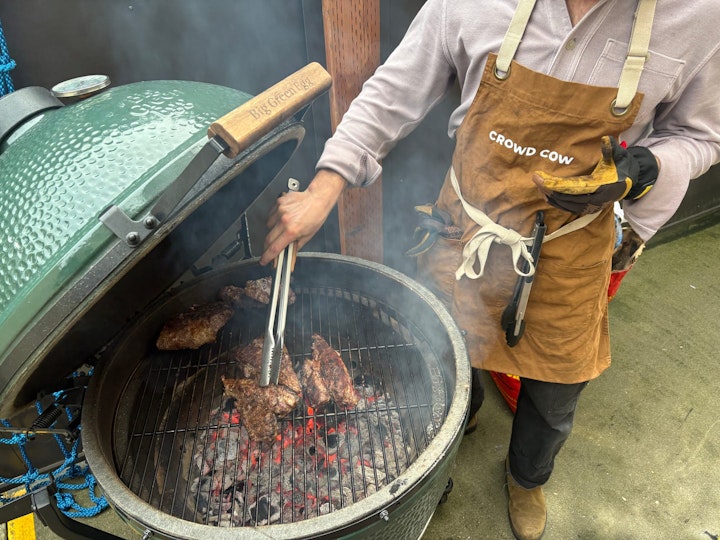
Winter Grilling: How to Do It Right
Plan on using more fuel
Cold weather changes combustion efficiency. For propane grills, lower ambient temperatures reduce vapor pressure inside the tank—at 20°F, propane pressure is roughly half of what it is at 70°F. That means less gas flow and slower heat generation. Charcoal and pellets face a similar problem: more energy is spent simply maintaining temperature instead of cooking food.
Practically speaking, expect fuel consumption to increase 20–40% in freezing conditions. Starting with extra fuel is a baseline requirement for holding steady temperatures long enough to sear, roast, or smoke properly when contending with the cold.
Position the Grill Away From Wind and Gusts
Wind actively disrupts heat transfer, so even a light breeze increases convective heat loss, pulling warmth off the grill body faster than radiation and conduction alone. In real-world winter conditions, wind commonly causes noticeable internal temperature drops and longer recovery times, particularly in lighter-weight grills or those with exposed fireboxes.
Placing your grill outside of wind corridors stabilizes airflow, improves combustion efficiency, and reduces recovery time after lid openings. The result is more predictable cooking and fewer flare-ups caused by oxygen spikes.
This matters even more for smoking, which runs at lower temperatures, recovers heat more slowly, and is easier to disrupt with wind or frequent lid openings.
Preheat Longer Than Normal, Especially for High-Heat Cooking
Metal absorbs heat slowly, and cold metal absorbs more of it before it ever reaches your food. Cast iron grates, steel lids, and ceramic components can take up to 50% longer to reach full heat in winter conditions.
For high-heat cooking—think steaks, burgers, or chops—under-preheating is an easy way to lose your sear. Extending preheat time ensures the grill itself is storing enough energy to maintain surface temperatures above 500°F, which is where you want to be (on the low-end, at least) for searing.If your grill or grates are lighter-weight, preheating will be faster, but so will any cooling effects from lid opening or wind gusts, so keep that in mind when planning your cook.

Keep the Lid Closed and Trust Your Thermometer
Every time you open the lid, you’re replacing hot air (which holds energy) with cold air (which immediately steals it). In summer, recovery might take seconds. In winter, that recovery can take minutes, especially if wind is present.
This is where a reliable thermometer earns its keep. Monitoring internal temperature lets you cook based on data and minimizes unnecessary lid openings, keeping heat loss at bay. We’d get a ThermoWorks grilling probe that can remain in the meat while the grill is firing, so you can track the internal temperature with the lid closed.
Favor Thicker Cuts and Indirect Cooking When Possible
Thicker cuts have higher thermal mass, meaning they lose heat more slowly and cook more evenly when ambient conditions fluctuate. A one-inch steak is far less forgiving in cold weather than a two-inch steak or a well-marbled roast.
Indirect cooking zones also help buffer temperature swings, allowing the grill to function more like an oven—which is exactly what you want when external temperatures are actively working against you.
Editor’s Note
Winter grilling isn’t a novelty or a flex. It’s simply cooking with a clearer understanding of heat, fuel, and airflow.
Once you account for those variables, grilling in winter becomes repeatable and reliable. Manage fuel, block wind, preheat thoroughly, and trust your temperatures. Do that, and the season stops being a limitation and starts being background noise.