
Pork
Where every pork cut comes from
Half a pig becomes something transformed by salt. The other half is a lean, fast-cooking meat that most people still cook twenty degrees too far.

Shoulder
The butt is at the top. That isn't a typo.

Loin
The pig got leaner. The advice didn't.

Belly
Fresh it's a roast. Cured and smoked it's breakfast.

Ribs
"Baby" is about the size of the bone, not the age of the pig.

Leg/Ham
The same leg becomes a Sunday roast or a two-year project.

Ground
Add salt, mix for five minutes, and you've made sausage.
Cut names vary by butcher and by region — the names here are the ones we use on Crowd Cow.
Pork stopped being a well-done meat in 2011
That year the USDA lowered its recommended safe internal temperature for whole cuts of pork from 160°F to 145°F, followed by a three-minute rest. The revision was overdue: trichinellosis from commercially raised American pork had been effectively absent for decades, and the parasite that taught two generations to cook chops grey was long gone before the guidance caught up. At 145°F a chop is faintly pink at the center and still holds its juice. At 160°F it does not, and no brine puts that back. Ground pork is the exception and still wants 160°F, for the same reason ground beef does — grinding moves surface bacteria through the whole batch.
Cured and fresh are two different foods from the same primal
Belly is bacon, and belly is also braised pork belly. Leg is ham, and leg is also a plain roast. The primal does not change; salt does. Curing pulls water out and drives salt and nitrite in, which firms the texture, fixes the color and makes the meat keep. It also seasons the muscle all the way through, so cooking a cured cut is a matter of heating and rendering rather than seasoning. The practical consequence is that a city ham and a fresh ham cook nothing alike — the cured one is already cooked and only needs bringing up to about 140°F, while the fresh one is a raw roast that behaves like a very large, very lean loin.
Modern pork is leaner than the recipes assume
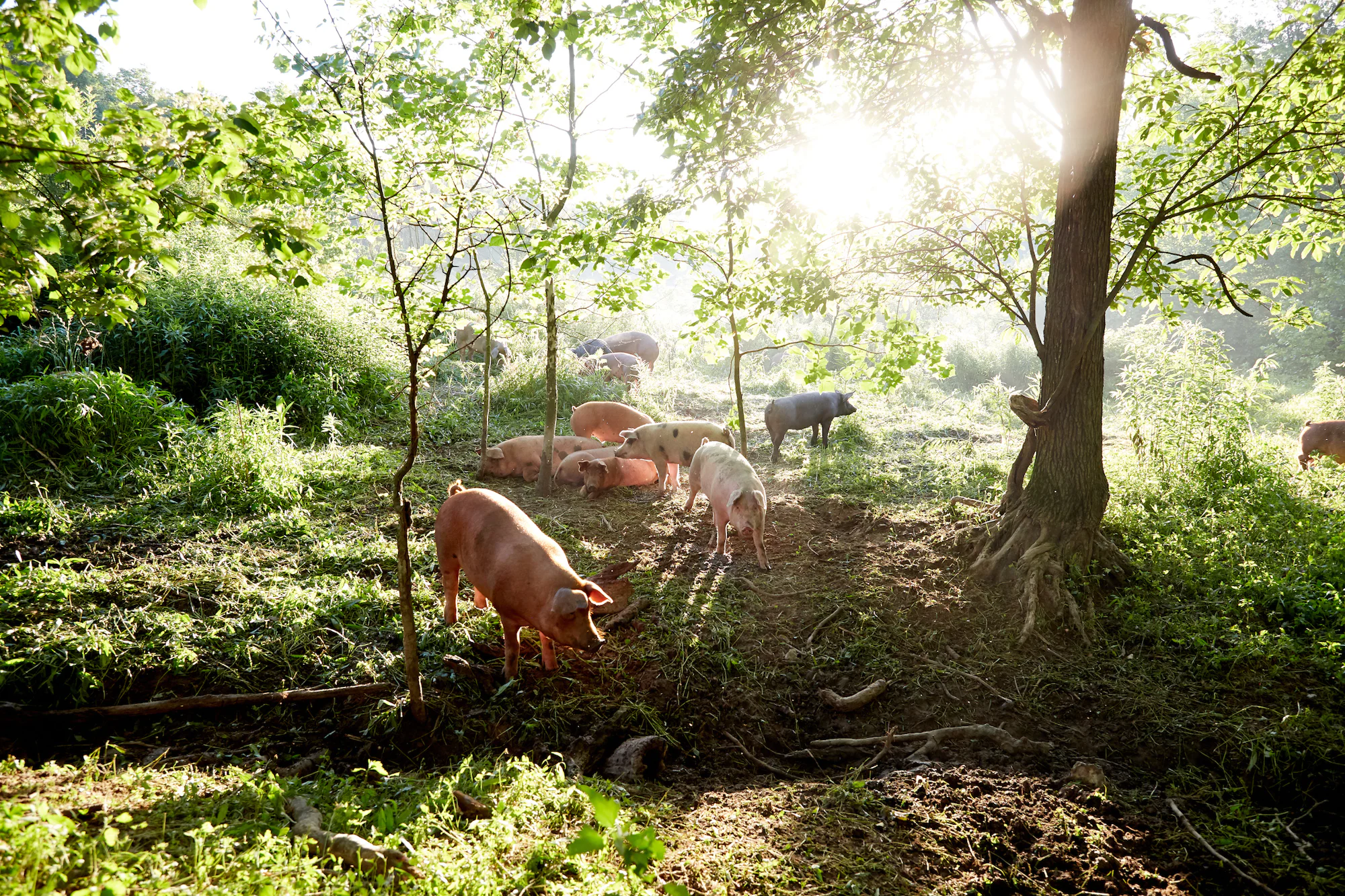
Decades of breeding for lean carcasses left most commodity pork with far less intramuscular fat than the dishes written for it take for granted, which is the other half of why chops come out dry. Heritage breeds — Berkshire, Duroc, Mangalitsa — were never bred in that direction and still carry visible marbling, so they forgive a few degrees of overshoot that a commodity loin will not.