
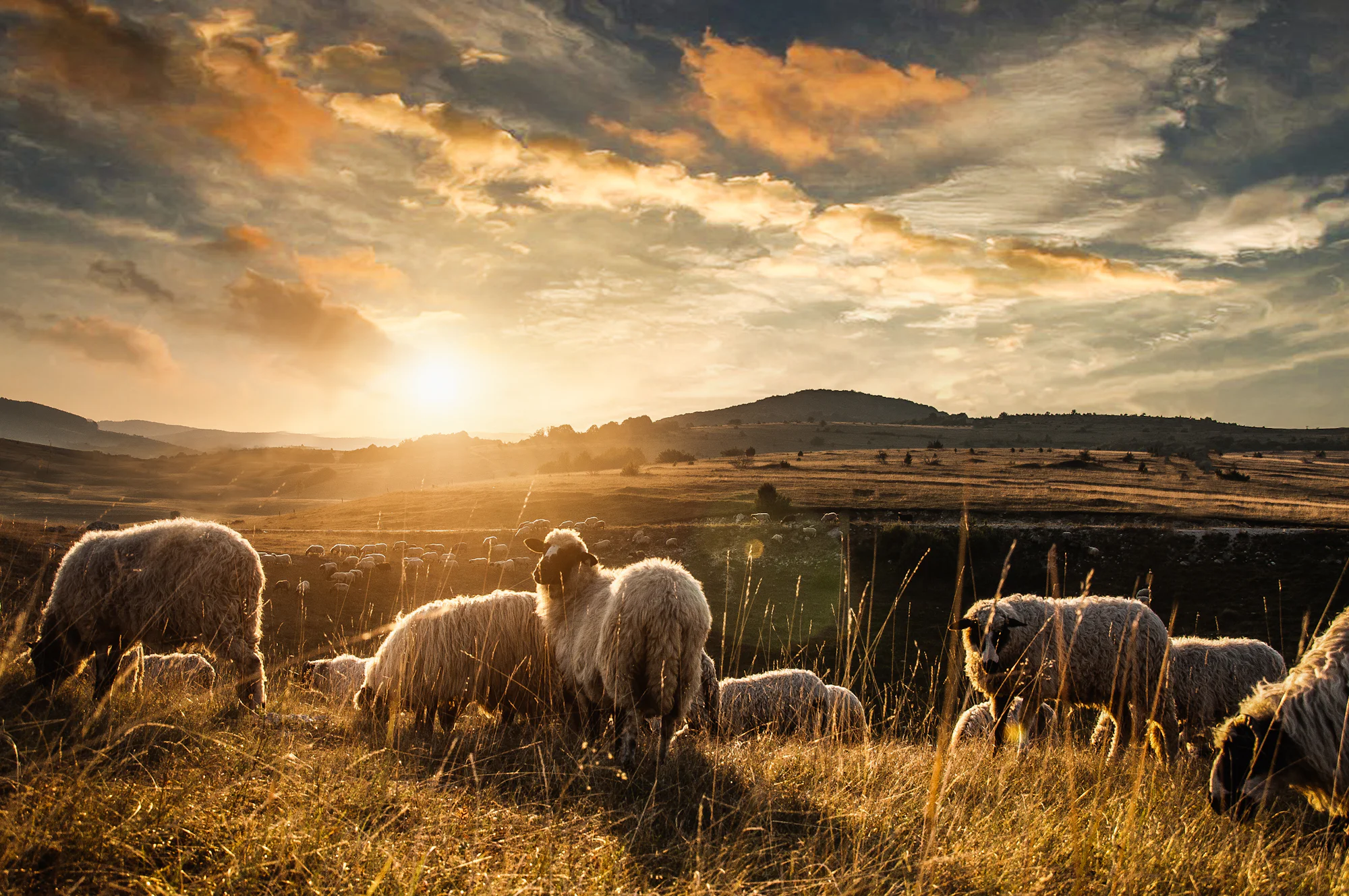
Lamb
Where every lamb cut comes from
A young animal, and a small one — which is why the cut that braises for three hours on a steer roasts in one.

Shoulder
The one lamb roast that forgives you.

Rib
Frenched for the photograph, not for the flavour.

Loin
Muscles that never carried anything, on an animal too young to toughen them.

Leg
It carried the animal everywhere, and you can still eat it pink.

Breast
The same part of the animal as pork belly, at a fraction of the attention.

Shank
The one part of a lamb that being young does not rescue.

Ground
Not a part of the animal — a decision about the rest of it.
Cut names vary by butcher and by region — the names here are the ones we use on Crowd Cow.
Almost every lamb cut is more tender than its beef equivalent
Lamb is slaughtered before its first birthday. Beef cattle are typically eighteen months to two years old. Collagen does not merely accumulate with age, it cross-links, and cross-linked collagen is what makes an old animal tough no matter how long you cook it. A lamb shoulder has done a fraction of the work a beef chuck has done, so the cut that would be a three-hour pot roast on a steer can be roasted and sliced.
The animal is also small — a market lamb goes to slaughter a little over a hundred pounds live, against roughly 1,300 for a finished steer. That is why lamb primals are sold close to whole: a rack, a leg, a shoulder. There is no lamb equivalent of breaking a beef loin down into eight separate steaks, because there is not enough animal to divide.
Where the flavor everyone argues about actually lives
The smell people call gamey comes largely from branched-chain fatty acids that build up in the fat with the animal's age and its diet — grass-finished and older animals carry more of them, grain-finished and younger animals less. Because those compounds sit in the fat rather than the muscle, trimming the fat cap reduces them, and so does not overcooking: they get more assertive as fat renders hard. Cooking lamb to the same medium-rare you would give a steak is the single biggest lever on how strong it tastes.
Lamb, hogget, mutton
Under a year old it is lamb. Between one and two it is hogget. Past two it is mutton. American shops sell almost nothing but lamb, which matters more than it sounds — the aggressive flavor many Americans remember and attribute to lamb is usually a memory of mutton.